



B2B Ecommerce & Marketplaces
-
TD SYNNEX Expands Digital Commerce Platform with AI and Sales Automation
TD SYNNEX is also expanding the reach of artificial intelligence assistants that can perform routine sales and customer service functions. After initially launching an AI assistant in Microsoft Teams, the distributor has added assistants to Slack and Webex.
-

TrueCommerce Expands AI Focus with New Product Leadership
Anthony Gallo will oversee product strategy, management, and design, with priorities including AI-based B2B commerce, enterprise system integration, and data governance.
-

What a $60 Billion Amazon Business Means for the $8 Trillion Distribution Industry
The distributors that thrive alongside a $60 billion Amazon Business will be the ones that stopped trying to out-Amazon Amazon and made themselves too complicated to replace.
-

Amazon Business Reaches $60 Billion GMV, Raising Competitive Pressure on Distributors
Amazon is increasingly positioning Amazon Business as the platform companies use to manage procurement itself, embedding the service deeper into customers’ purchasing workflows rather than competing only for individual orders.
-

Graybar, BradyPLUS Among Distributors Joining OMNIA Procurement Marketplace
Together, the additions broaden the marketplace across 200 product categories, including electrical, industrial, information technology, laboratory supplies, foodservice equipment, facility maintenance, and workplace furnishings.
-
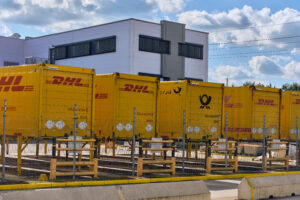
DHL eCommerce, USPS Sign Exclusive Last-Mile Delivery Deal Valued at More Than $10 Billion
A long-term exclusive partnership between DHL eCommerce and USPS may improve network stability, service consistency, and pricing predictability for high-volume shippers, particularly distributors that rely on parcel delivery for ecommerce orders, direct shipments to contractors and end users, or replenishment of branch locations.
-

Grainger Embeds AI Across Warehouse Operations, Customer Service and Ecommerce
CEO D.G. Macpherson said Grainger’s AI deployments now fall into two primary categories: internal productivity and customer-facing digital capabilities.
-

Amazon Business Expands Same Day Grocery Delivery to Commercial Customers
The expansion marks Amazon’s latest move to increase its presence in commercial purchasing and workplace replenishment while extending its reach into food distribution and delivery services.
-
Amazon Business Deploys AI Across Procurement
The centerpiece of Amazon Business’s current AI deployment is the Amazon Business Assistant.
-

Commerce.com Rejects Second Hostile Bid from Rezolve AI as Agentic Commerce Battle Escalates
As ecommerce and AI vendors compete to control the B2B commerce stack, distributors face potential shifts in the platforms, integrations and digital capabilities that underpin their online sales and customer experience.