



Why This Matters to Distributors: A sharp increase in diesel prices and higher freight costs are adding to distributor operating expenses, while rising prices for intermediate goods suggest additional supplier cost pressure could be working its way through the supply chain.
U.S. producer prices rose in August as higher energy and transportation costs drove another increase in business expenses, creating new pricing and margin pressure for distributors.
The Producer Price Index for final demand increased 0.4% in August from July on a seasonally adjusted basis, the U.S. Bureau of Labor Statistics reported. Producer prices were 5.4% higher than a year earlier. The monthly increase followed a 0.1% gain in July and a 0.1% decline in June.
Goods prices drove much of the increase. Prices for final demand goods rose 1.1%, while services prices edged up 0.1%. The index excluding food, energy and trade services increased 0.3% in August and 4.7% from a year earlier.
Energy was the biggest factor.
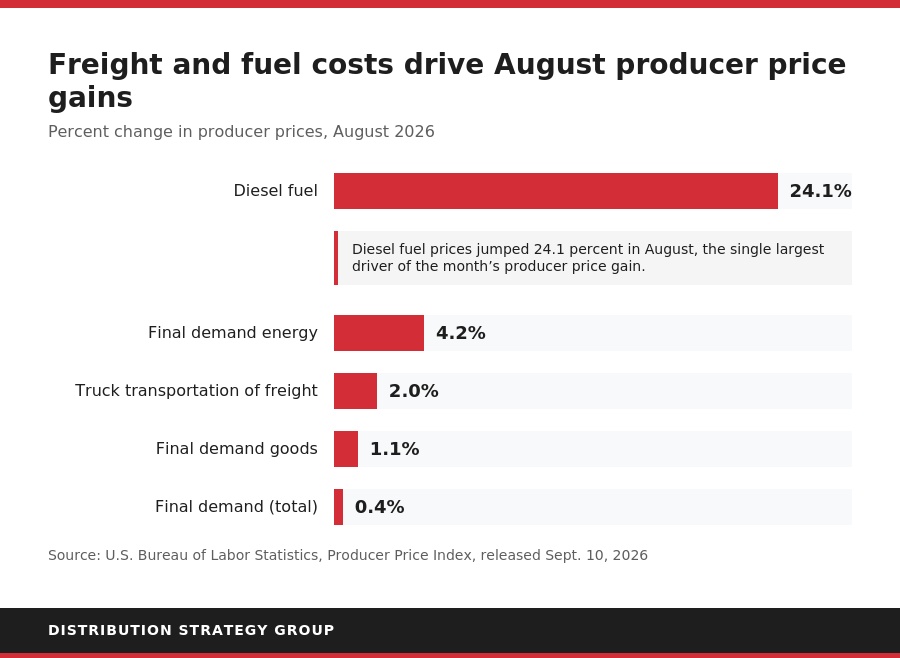
Final demand energy prices jumped 4.2% and accounted for more than three-fourths of the increase in goods prices. Prices for goods excluding food and energy increased 0.4%, while food prices rose 0.1%.
Diesel represented an especially significant increase for distributors operating private fleets or relying heavily on truck transportation. Diesel fuel prices surged 24.1% in August and accounted for more than one-third of the increase in final demand goods prices. Gasoline, jet fuel and heating oil prices also increased.
Freight costs also increased. Prices for final demand transportation and warehousing services increased 2.3% in August, while truck freight transportation prices rose 2.0%. The index for final demand trade services, which measures changes in margins received by wholesalers and retailers, declined 0.2%.
The cost pressure extended further upstream.
Prices for processed goods used as intermediate inputs increased 1.8% in August after falling 0.4% in July. Processed energy goods prices jumped 7.3%, while processed materials excluding food and energy rose 0.5%. Overall, processed intermediate goods prices were 11.5% higher than a year earlier.
Unprocessed intermediate goods prices increased 1.1% in August and were 12.8% higher than a year earlier. Nonferrous scrap prices rose 3.7%, while crude petroleum and nonferrous metal ores also increased. Prices for iron and steel scrap declined.
For industrial distributors, those upstream increases could translate into additional supplier price increases in the months ahead. The combination of higher product acquisition costs and rising transportation expenses could make it more difficult for distributors to protect margins without passing at least some of those increases on to customers.
Business service costs also increased. Prices for services used as intermediate inputs rose 0.3% in August and 5.1% from a year earlier. Transportation and warehousing services for intermediate demand increased 1.3%, while trade services margins rose 1.0%. Courier, messenger and U.S. postal service prices increased 1.5%.
Inflationary pressure was evident across multiple stages of the production pipeline. Stage 1 intermediate demand prices increased 1.4% in August and were 11.3% higher than a year earlier. Stage 2 prices rose 0.8% for the month and 9.7% from a year earlier. Stage 3 prices increased 0.8%, while stage 4 prices rose 0.4%.
The August numbers point to a more challenging cost environment for distributors after some price measures eased earlier in the summer. Companies with large delivery fleets, significant freight exposure or products tied closely to energy and commodity markets could face the greatest near-term pressure.
The broader data also indicates that producer inflation is not limited to energy. Prices excluding food, energy and trade services were 4.7% higher than a year earlier, suggesting underlying business costs remain elevated.
The Bureau of Labor Statistics is scheduled to release September producer price data Oct. 15.
Do not miss any content from Distribution Strategy Group. Join our list.
Share this article:
